
info@mail.ucallm.com
Cancer cells undergo extensive metabolic reprogramming to support proliferation, survival, and adaptation to dynamic tumor environments. The Warburg effect, characterized by increased glucose uptake and aerobic glycolysis, represents a central feature of tumor metabolism. However, emerging evidence indicates that cancer metabolic regulation extends beyond glycolysis, involving mitochondrial plasticity, hypoxia signaling, oncogenic pathways, and tumor microenvironment interactions.
We provide a comprehensive portfolio of validated antibodies and detection solutions to investigate metabolic pathways from molecular regulation to functional phenotype characterization.
Key Target Highlights
Core Molecular Targets in Warburg Effect Research
Biological Process | Key Targets | Biological Significance | Research Applications |
Glucose transport | GLUT1, GLUT3 | Controls glucose availability for glycolysis | Tumor metabolic profiling |
Glycolytic initiation | HK2, PFKFB3 | Regulates glycolytic flux | Cancer metabolism studies |
Glycolytic regulation | PKM2, PDK1 | Determines pyruvate utilization and metabolic fate | Metabolic pathway analysis |
Lactate metabolism | LDHA, MCT1/MCT4 | Controls lactate production and export | Tumor microenvironment studies |
Hypoxia response | HIF-1α, HIF-2α | Activates glycolytic adaptation under low oxygen | Hypoxia signaling research |
Growth signaling | PI3K/AKT/mTOR, AMPK | Integrates nutrient sensing and metabolism | Metabolic regulation studies |
Oncogenic regulation | MYC, KRAS, p53 | Controls metabolic gene expression | Cancer driver studies |
Mitochondrial metabolism | PGC-1α, OXPHOS complexes | Defines metabolic flexibility | Metabolic plasticity research |
Key research trend:
Modern Warburg effect research is increasingly moving beyond the concept of increased glycolysis alone toward integrated metabolic network analysis, combining glycolytic flux, mitochondrial function, hypoxia signaling, oncogenic regulation, and tumor microenvironment interactions to understand cancer metabolic adaptation, therapeutic resistance, and metabolic vulnerabilities.
Recommended Warburg Effect Marker Strategy
Multi-Level Validation Framework
Detection Layer | Representative Markers | Scientific Purpose |
Glucose Metabolism | GLUT1, HK2, PFKFB3 | Evaluate glycolytic activation |
Glycolytic Flux | PKM2, LDHA, PDK1 | Determine glycolytic pathway activity |
Lactate Metabolism | MCT1, MCT4, extracellular lactate | Assess metabolic output |
Hypoxia Adaptation | HIF-1α, VEGF, CA9 | Confirm hypoxic metabolic response |
Signal Regulation | p-AKT, p-mTOR, AMPK | Analyze upstream metabolic control |
Mitochondrial Function | COX IV, TOM20, PGC-1α | Evaluate oxidative metabolism balance |
Metabolic Plasticity | MYC, p53, NRF2 | Investigate adaptive metabolic changes |
Core Warburg Effect Validation Strategy
“Golden Pair” Concept for Pathway Confirmation
Strategy | Marker Combination | Scientific Purpose | Application |
Golden Pair A: Glycolytic Activation | GLUT1 + HK2 | Confirm enhanced glucose utilization | Cancer metabolic profiling |
Golden Pair B: Glycolytic Output | PKM2 + LDHA | Validate glycolytic conversion and lactate production | Metabolic phenotype studies |
Golden Pair C: Hypoxia Adaptation | HIF-1α + CA9 | Link oxygen sensing with glycolytic remodeling | Hypoxic tumor models |
Golden Pair D: Metabolic Signaling Regulation | p-AKT/mTOR + AMPK | Define upstream pathway regulation | Target mechanism studies |
Competitive Technology Landscape
Cancer Metabolism Research Workflow
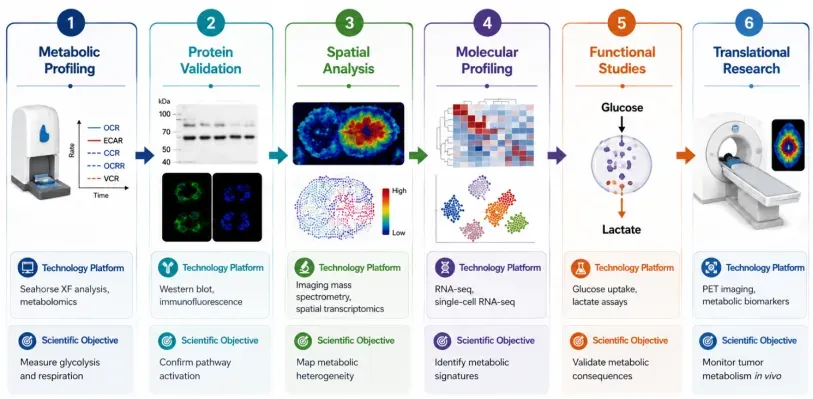
Cancer metabolism research has evolved from studying individual metabolic pathways to a comprehensive investigation of metabolic phenotypes, molecular regulation, spatial heterogeneity, and translational applications. A complete research workflow integrates multi-omics technologies, protein validation, and functional assays to decode tumor metabolic adaptation.
Pathway Overview
The Warburg effect describes the preference of cancer cells for aerobic glycolysis over oxidative phosphorylation, enabling rapid ATP production, biosynthetic precursor generation, and adaptation to tumor microenvironments. This metabolic reprogramming is regulated by HIF-1α, MYC, PI3K–AKT–mTOR, AMPK, and glycolytic enzymes. Research into Warburg metabolism provides insights into tumor growth, metabolic plasticity, and therapeutic vulnerabilities.
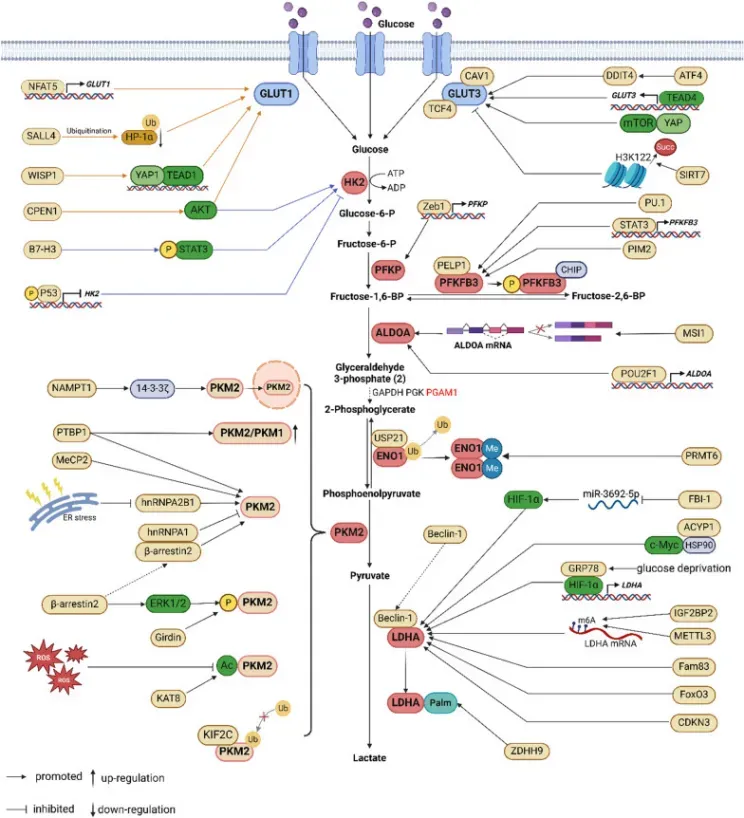
The regulatory network of glycolytic factors in cancer chemoresistance. (PMID: 40264038)
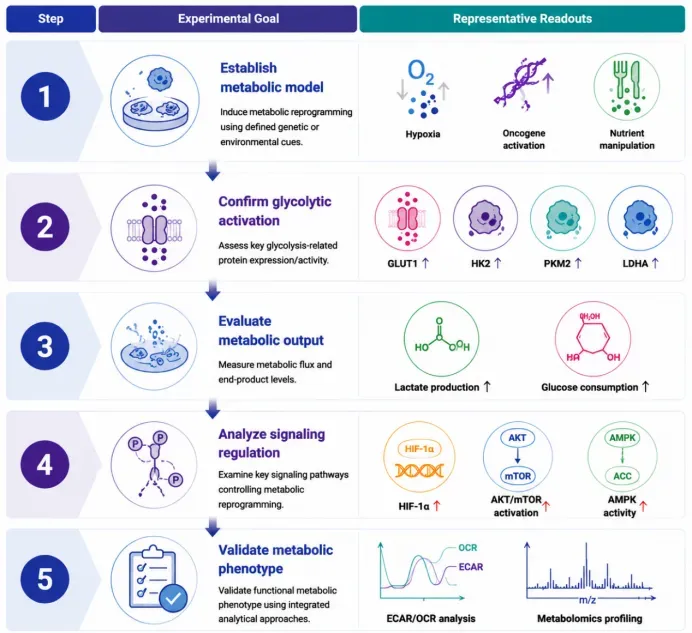
Recommended Experimental Validation Workflow
Step | Experimental Goal | Representative Readouts |
Step 1 | Establish metabolic model | Hypoxia, oncogene activation, nutrient manipulation |
Step 2 | Confirm glycolytic activation | GLUT1, HK2, PKM2, LDHA |
Step 3 | Evaluate metabolic output | Lactate production, glucose consumption |
Step 4 | Analyze signaling regulation | HIF-1α, AKT/mTOR, AMPK |
Step 5 | Validate metabolic phenotype | ECAR/OCR analysis, metabolomics |
Featured Research Application Examples
Research Area | Model System | Key Evaluation Parameters | Scientific Question |
Tumor glycolysis | Cancer cell lines | GLUT1, HK2, LDHA | How is aerobic glycolysis activated? |
Hypoxic adaptation | 3D tumor models | HIF-1α, CA9, VEGF | How do tumors survive oxygen limitation? |
Metabolic drug response | Treatment models | Glycolysis/OXPHOS markers | How does metabolism influence therapy response? |
Tumor immune metabolism | Tumor–immune models | Lactate, MCT4, immune markers | How does metabolism regulate immune escape? |
Metabolic plasticity | Advanced tumor models | AMPK, PGC-1α, OXPHOS | How do tumors adapt to stress? |
Frequently Asked Questions
Q1. Which markers are commonly used to study the Warburg effect?
Warburg effect research requires a combination of glycolytic markers, metabolic regulators, and functional assays. Key markers include GLUT1 for glucose uptake, HK2 for glycolysis initiation, PFKFB3 for glycolytic regulation, PKM2 for pyruvate metabolism, and LDHA for lactate production. Additional markers such as MCT1/MCT4 evaluate lactate transport, while HIF-1α and MYC reflect metabolic reprogramming regulation. Comprehensive analysis using Western blot, immunofluorescence, IHC, and metabolic assays provides reliable evidence of glycolytic activation.
Q2. How can researchers validate activation of aerobic glycolysis?
Functional validation of the Warburg phenotype should combine molecular analysis with metabolic measurements. Common approaches include Seahorse extracellular flux analysis (ECAR/OCR), glucose uptake assays, lactate production assays, and ATP measurement. Increased glycolytic activity is typically confirmed by elevated expression of GLUT1, HK2, PKM2, and LDHA, together with enhanced glucose consumption and lactate release.
Q3. What signaling pathways regulate the Warburg effect?
The Warburg effect is controlled by multiple signaling networks. Major regulators include HIF-1α, which drives glycolytic gene expression under hypoxia; PI3K/AKT/mTOR, which promotes glucose metabolism and cell growth; and MYC, which enhances glycolytic enzyme expression. Other pathways, including AMPK, p53, and Wnt/β-catenin, also regulate metabolic adaptation and tumor progression.
Q4. Why are PKM2 and LDHA important markers in Warburg effect research?
PKM2 and LDHA are key indicators of metabolic reprogramming. PKM2 regulates glycolytic flux and supports biosynthetic metabolism required for tumor growth, while LDHA promotes lactate production and maintains glycolytic activity. Together with GLUT1, HK2, and HIF-1α, these markers provide a comprehensive view of cancer cell metabolic adaptation.
Q5. How does the Warburg effect impact cancer progression and therapy response?
Metabolic reprogramming promotes tumor growth by increasing energy production, biosynthesis, and survival under stress conditions. Excessive glycolysis leads to lactate accumulation, tumor microenvironment acidification, immune suppression, and therapy resistance. Current studies often combine glycolytic markers with immune checkpoint markers (e.g., PD-L1), hypoxia markers (HIF-1α), and signaling pathway analysis to explore the role of metabolism in cancer progression.
Key References
1. De Leon-Oliva D., González-Prieto P., De Castro-Martinez P., et al. (2025).Revisiting the biological role of the Warburg effect: Evolving perspectives on cancer metabolism.Pathology - Research and Practice. 273:156151.
2. Hammond N.G., Cameron R.B., Faubert B. (2024).Beyond glucose and Warburg: finding the sweet spot in cancer metabolism models.npj Metabolic Health and Disease. 2:11.
3. Pang B., Wu H. (2025).Metabolic reprogramming in colorectal cancer: a review of aerobic glycolysis and its therapeutic implications for targeted treatment strategies.Cell Death Discovery. 11:321.
4. Vander Heiden M.G., Cantley L.C., Thompson C.B. (2009).Understanding the Warburg effect: the metabolic requirements of cell proliferation.Science. 324(5930):1029–1033.
5. Liberti M.V., Locasale J.W. (2016).The Warburg Effect: How Does it Benefit Cancer Cells?Trends in Biochemical Sciences. 41(3):211–218.
6. Semenza G.L. (2011).Regulation of metabolism by hypoxia-inducible factor 1.Cold Spring Harbor Symposia on Quantitative Biology. 76:347–353.